October 20, 2024
Clever Me
October 20, 2024
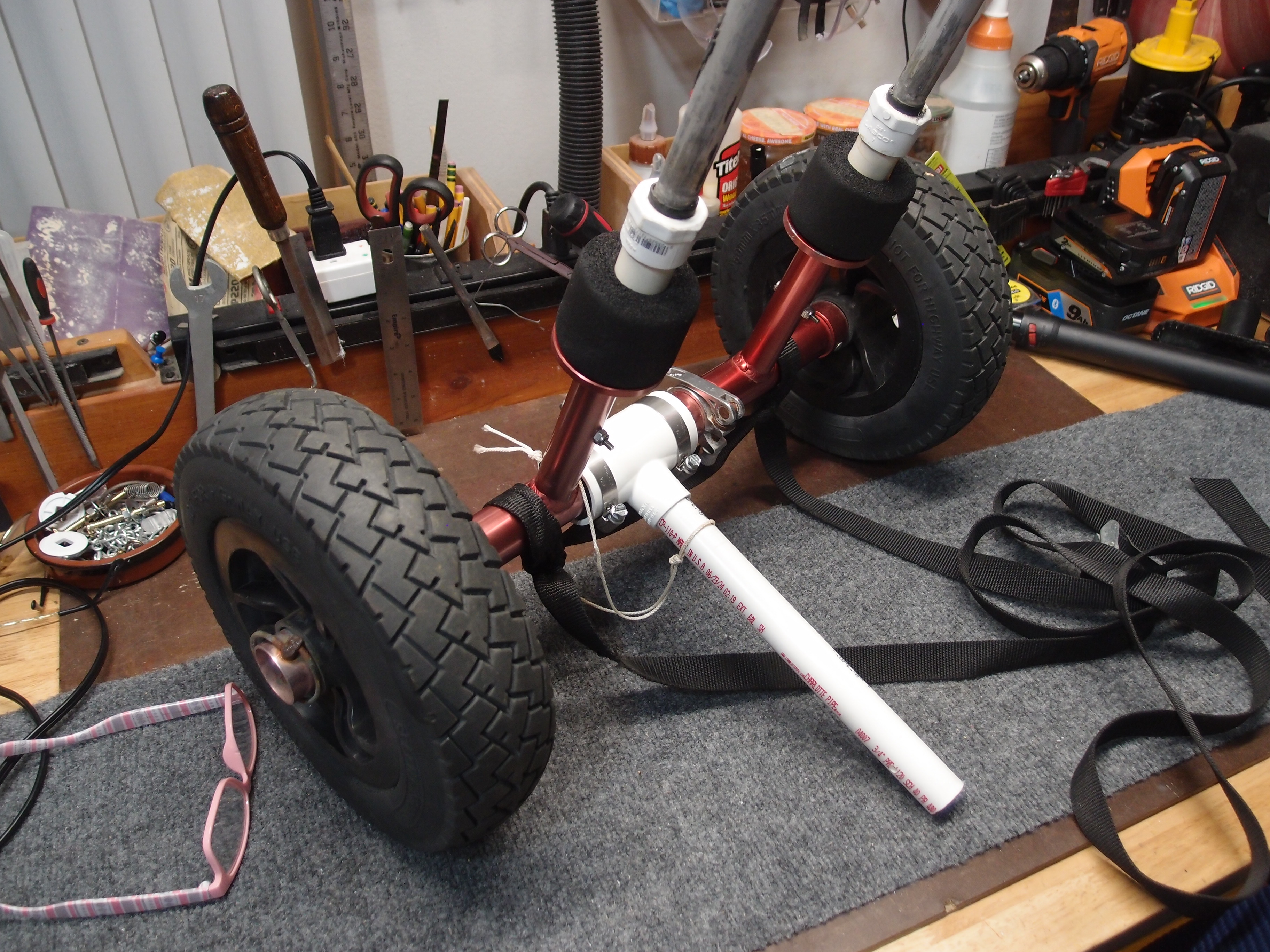
The problem with scupper carts is that they always seem to need a third hand to set up, and that hand is usually attached to someone else, in which case you don't really need a scupper cart, do you? Newer models have a built-in kickstand that looks so useful, it got me thinking. For twelve dollar's worth of plumbing parts at Home Depot, I made this.
First, I cut a 1/4-inch slot out of the back side of the plastic tee. Then I cut a rubber drain union in two pieces which fit tightly between the tee and the cart tube. The hose clamps are the rest of the union, and can be adjusted to set the friction for holding the angle. The arm is a foot of schedule-40, not glued in, so I can pop it off when not in use. It is tied on to keep from losing it.
This old scupper cart has seen a lot of use, and this is a yuge improvement. Yuge, I tell you, yuge.
Update
Works great! You can sight the cart through the scupper holes to line it up. Fold the arm up before you go to keep it from hitting the ground.