June 19, 2026
Clinging jellyfish found in large numbers in Metedeconk River
June 19, 2026
Amanda Oglesby
Asbury Park Press
June 19, 2026
BRICK - A surge of clinging jellyfish are infiltrating the Metedeconk River, where a 6-year old child has already suffered a severe string, said New Jersey's leading expert on jellyfish.
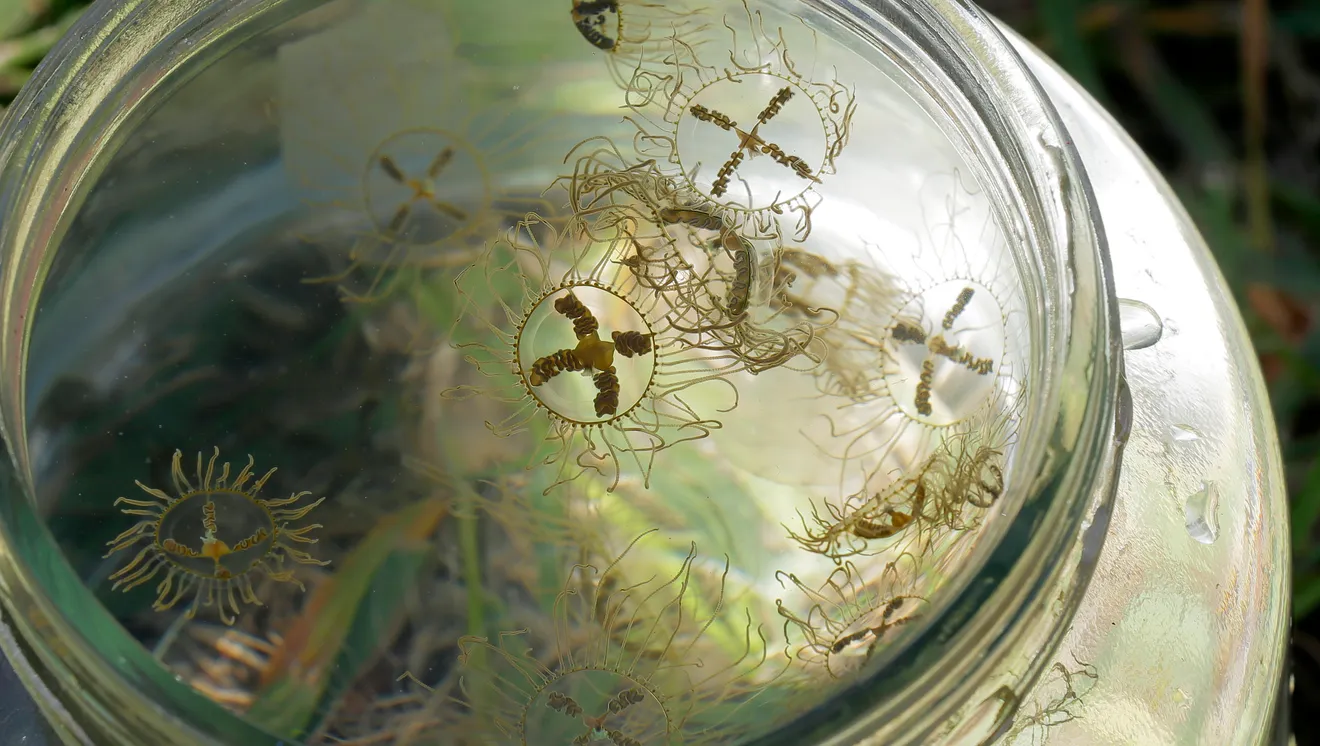
Paul Bologna, the director of Montclair University's Marine Biology and Coastal Sciences Program, said the river's north bank has "a huge number of these clinging jellies." These coin-sized translucent jellyfish cling to sea lettuce and filamentous red algae common in the Jersey Shore's coastal rivers and estuaries, he said.
"Their tentacles have special adhesive pads that ... suction cup themselves onto that stuff," Bologna said.
Despite their small size, the clinging jellyfish pack a dangerously powerful sting, one that can lead to days-long hospitalizations, the biologist said.
"They're very different from ... what we consider normal jellyfish stings," he said. "Under normal circumstances, if you're stung, it's this incredible intense pain. And then over time, it begins to lessen.
But clinging jellyfish "have these incredible paralysis venoms or paralysis toxins," Bologna said. "And essentially what happens is you get stung, it hurts a lot. But as time goes on, as those paralysis toxins move through your body, they start to create muscle cramps."
The muscles stay tensed, rather than releasing after the cramps, he said.
"The pain continues to build over time until most people … they're just in excruciating pain throughout their body," he said.
Earlier this season, a 6-year-old girl was stung while swimming in shallow water along the south bank of the Metedeconk River, Bologna said. A clinging jellyfish became trapped between her skin and her life vest, resulting in multiple stings, he said.
The situation became "pretty serious in a rapid time frame," the jellyfish expert said. The pain soon moved into the girl's legs and resulted in multiple visits to the emergency room, he said.
Bologna said the intense pain can last for days in adults and children. In some cases, people must be hospitalized after strings and treated with heavy painkillers, he said.
Symptoms of clinging jellyfish stings include severe pain, redness at the sting site, joint pain, respiratory trouble and neurological symptoms, according to the Woods Hole Oceanographic Institution.
What to do when stung by a clinging jellyfish
If stung, victims are advised to rinse the area in local river or bay water to remove the jellyfish. Do not use freshwater, because that can trigger additional stingers to fire, according to the Seattle Children's Hospital.
"Get a hot compress - as hot as you can handle - on that (sting) site for 20 to 30 minutes," Bologna said. "That extra heat ... denatures the proteins."
With the hot compress, "try to basically break apart or destroy as much of the venom as you can," he said.
The Metedeconk is not the only river along the Jersey Shore where clinging jellyfish are found. They have been discovered from Sandy Hook to Cape May, including in the Shrewsbury River, in Cape May and North Wildwood, the Montclair University professor said.
Ocean beaches are too turbulent for clinging jellyfish, which need calm water to survive, he said.
In addition, clinging jellyfish begin to die off once the river and bay temperatures reach consistent temperatures at or above 28 degrees Celsius (about 82 degrees Fahrenheit), he said. Those temperatures typically happen closer to July 4, he said.
"I think we've dodged a lot of bullets over the years in New Jersey, just because that peak part (of swim season) happened July, August, and this is when their (clinging jellyfish) numbers start to decline rapidly in New Jersey," Bologna said.
Larger stinging bay nettles common around the Jersey Shore are one of the clinging jellyfish's only known predators, he said.
"This is another reason why the bloom of clinging jellies tends to kind of dissipate right around the 4th of July, because this is when the ... bay nettles start to emerge in our coastal waters," he said.
Bologna urged Jersey Shore residents to report sightings of clinging jellyfish at the Facebook group "New Jersey Jellyspotters."
"When we get the general public to help us out there, that really helps us understand what's going on (with jellyfish at the Jersey Shore) and helps us spread information out there as well," he said.
Amanda Oglesby covers education and the environment. Reach her at aoglesby@app.com or 732-557-5701.