Note: New Jersey law requires the wearing of a PFD from November 1 through May 1.

Ducks, Geese, Swans

Mallard Duck
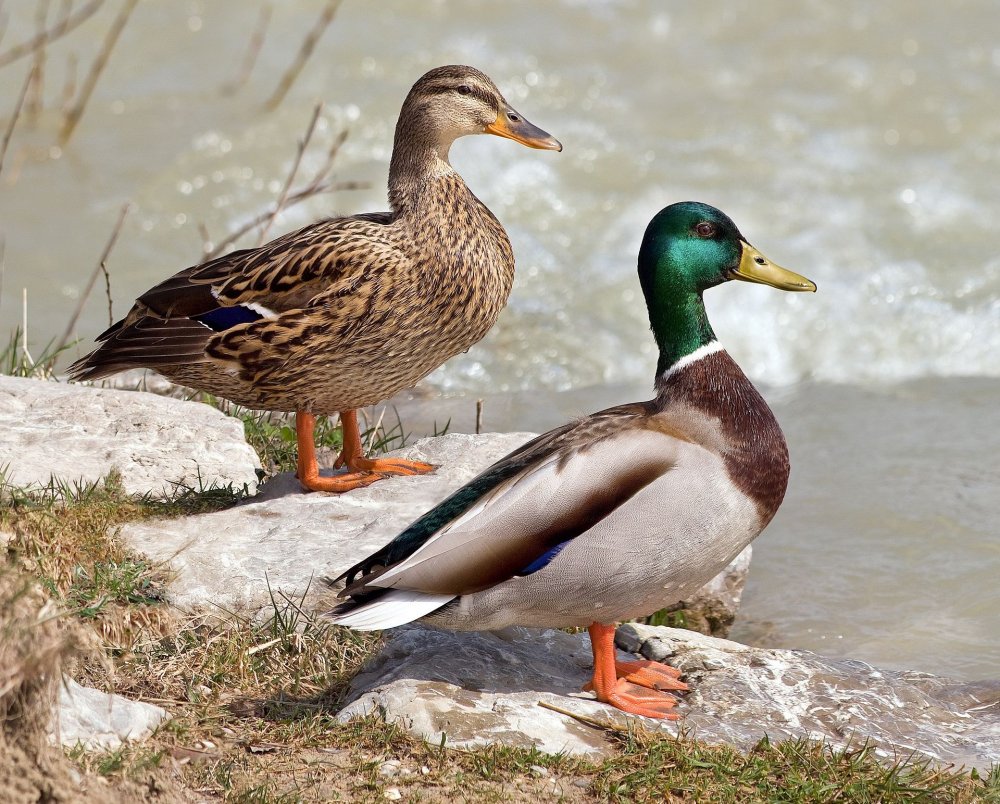
Female above, male below

There are many kinds of wild ducks, and even more types of domesticated ducks, but the Mallard is a good representative of all. Ducks are harmless. Bring some bread along, I never met a duck that didn't expect to be fed.

-- Wikipedia


Canada Goose
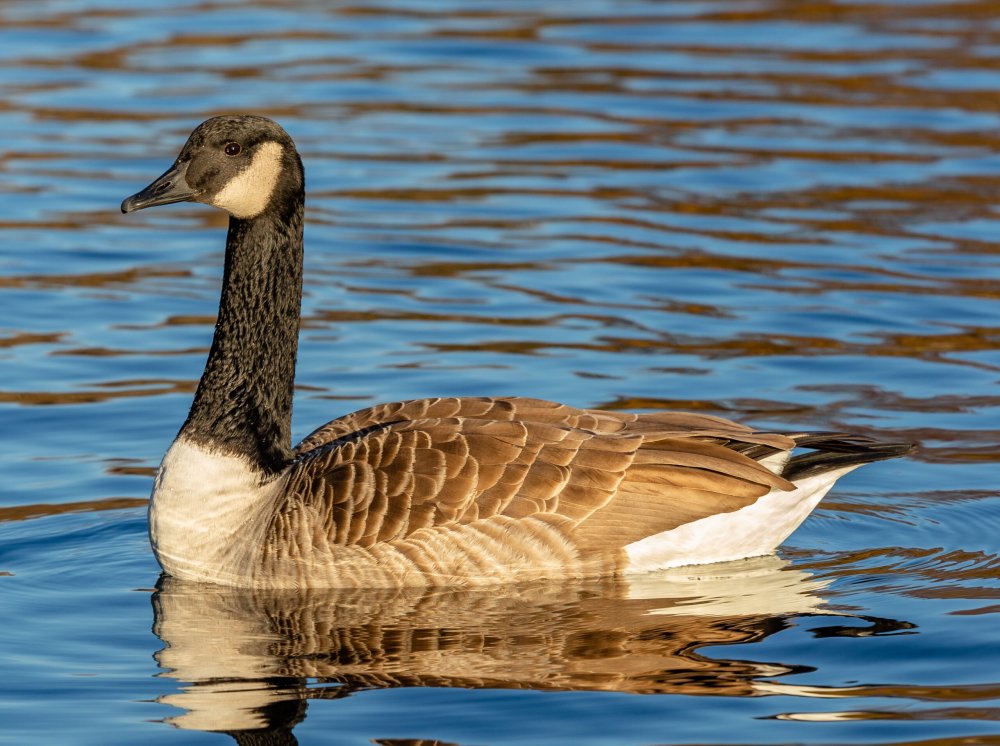
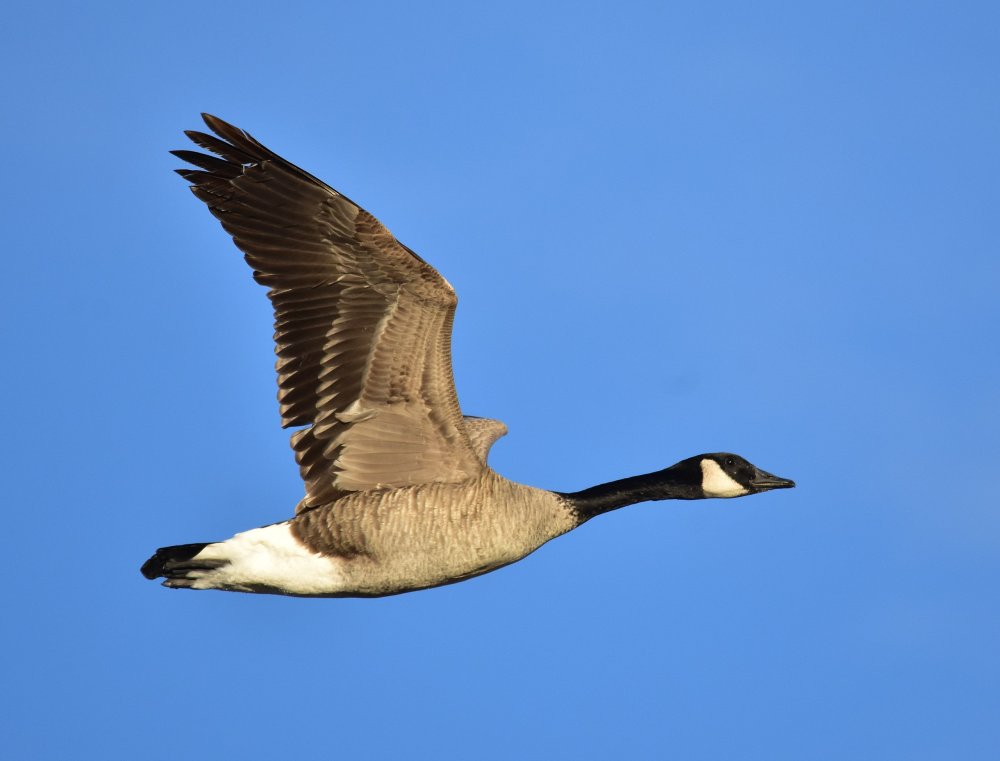
Canada Geese are extremely common. Although not native to the area, a large population has long-ago stopped migrating and become resident. Most of the time, they will retreat from your approach, but if they have young it is best to avoid them, or you might get a nasty surprise.
-- Wikipedia


Brant
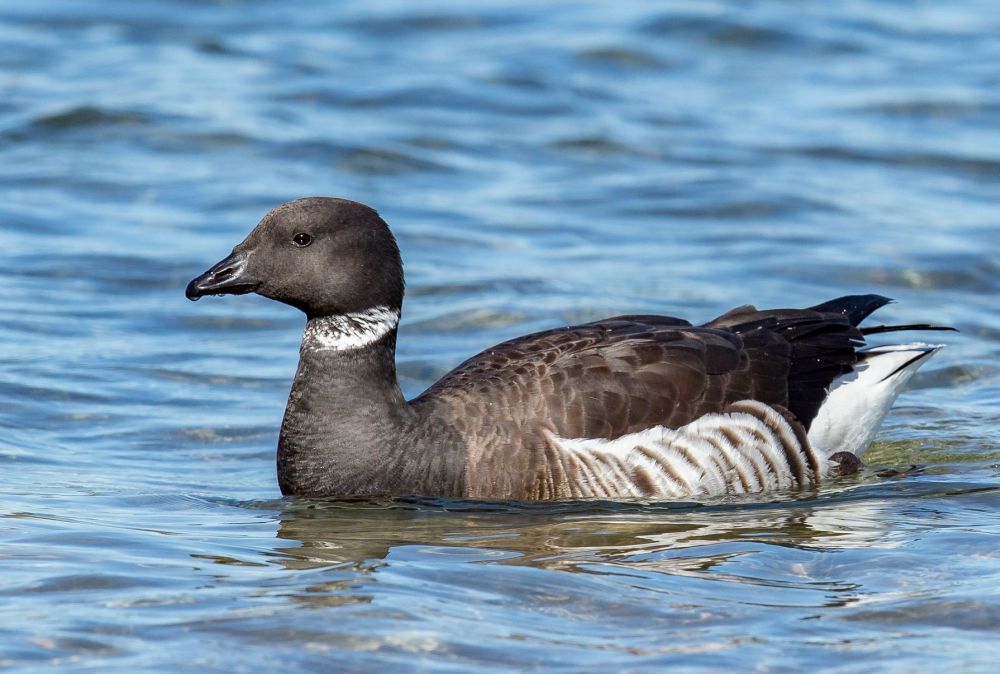
Brants are very similar to Canada Geese, but smaller - intermediate in size between a goose and a duck. At times there can be a great many of them around, as they pass through in migration. Other times there are none. They have a much stronger affinity for saltwater than the other birds on this page.
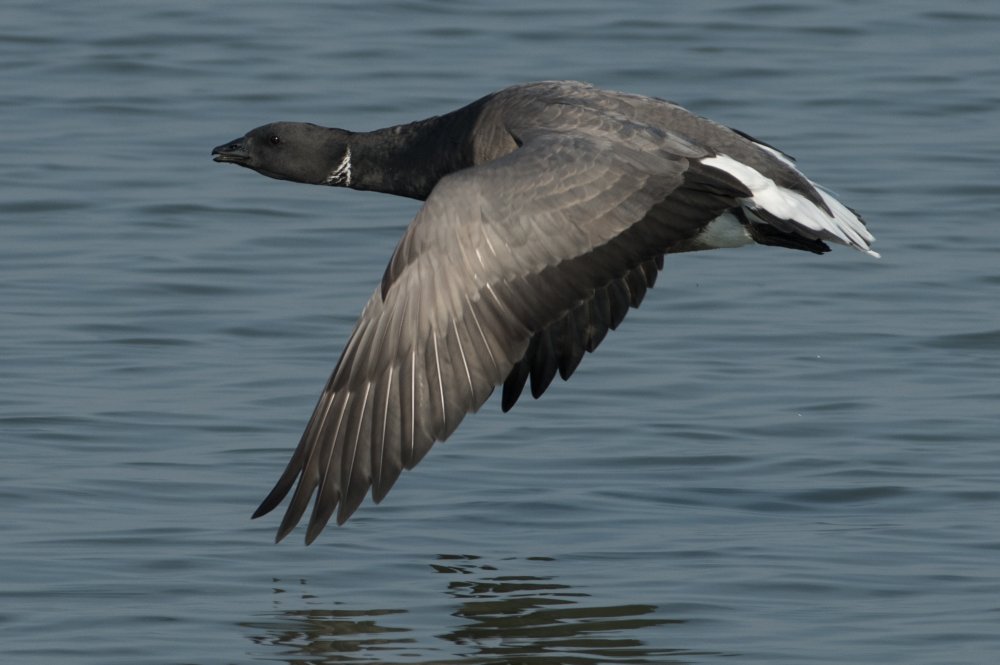
I don't think I've ever seen a Brant on land, always in the water or in the air.

-- Wikipedia


Mute Swan

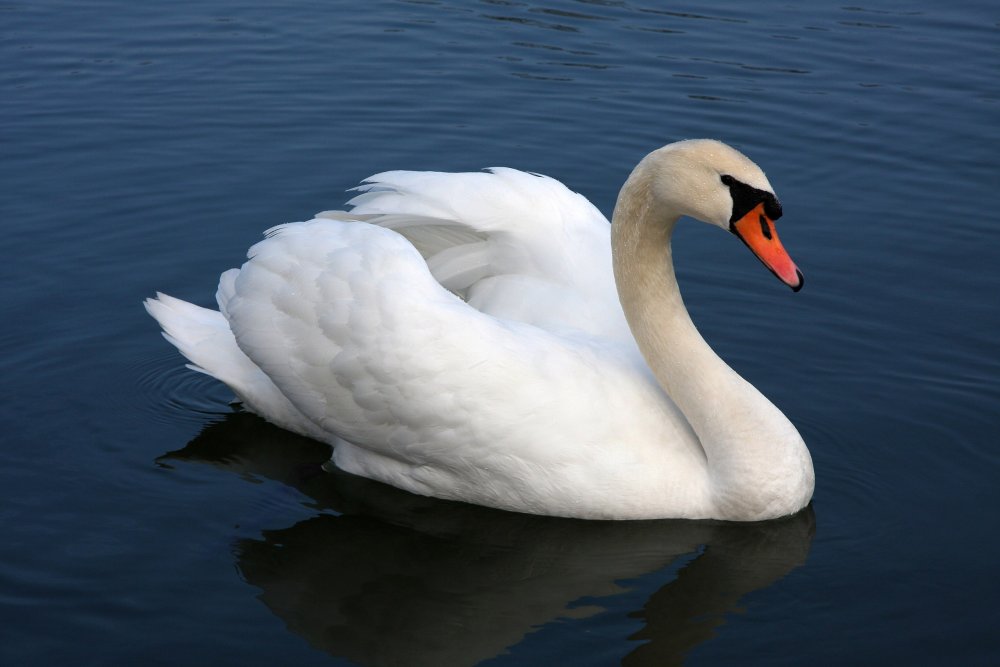
Swans are beautiful to watch, but do so from a respectful distance. Swans are large and strong, and can be quite aggressive, especially when they are protecting their young. Of all the birds you will find while out kayaking, this is the only one that is likely to attack you, and if it does, you will lose. A pair of swans will clear a small body of water entirely of all other waterfowl - that is the reason they were introduced around the world. Swans are perfectly capable of flying, but you'll seldom see them do it - they'd rather stand their ground and fight.
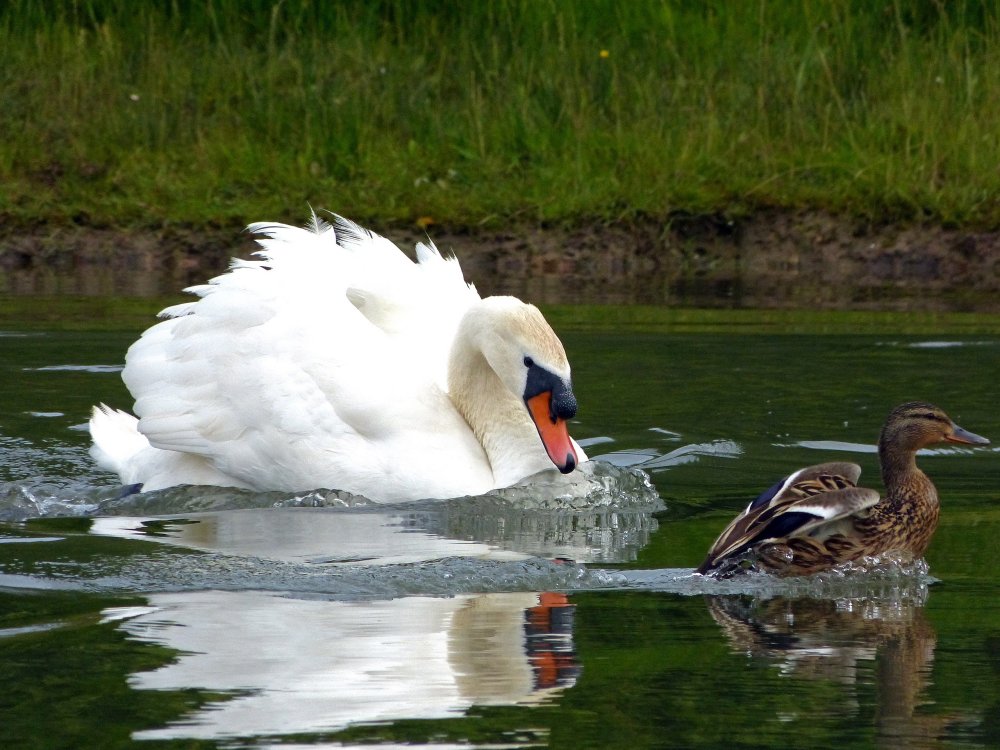
A Mute Swan driving-off a duck

If a Swan ruffles-up it's feathers like the one above, back away! He is not afraid of you!

-- Wikipedia


Delaware & Raritan Canal
( 40.38309, -74.74995 )

  1. D-R Canal - Amwell Rd ( 40.50340, -74.58268 )
  2. D-R Canal - Blackwells Mills ( 40.47550, -74.57220 )
  3. D-R Canal - Griggstown (N) ( 40.43834, -74.61397 )
  4. D-R Canal - Griggstown (S) ( 40.42912, -74.61816 )
  5. D-R Canal - Kingston (N) ( 40.37489, -74.61854 )
  6. D-R Canal - Kingston (S) ( 40.37326, -74.61861 )
  7. D-R Canal - Lawrence (N) ( 40.27450, -74.70332 )
  8. D-R Canal - Lawrence (S) ( 40.26746, -74.71071 )
  9. D-R Canal - Lawrenceville ( 40.30501, -74.68490 )
  10. D-R Canal - Manville ( 40.52861, -74.58178 )
  11. D-R Canal - New Brunswick ( 40.50806, -74.46376 )
  12. D-R Canal - North Trenton ( 40.24901, -74.72865 )
  13. D-R Canal - Plainsboro (E) ( 40.34321, -74.62964 )
  14. D-R Canal - Plainsboro (W) ( 40.34190, -74.63758 )
  15. D-R Canal - Princeton (N) ( 40.33879, -74.64715 )
  16. D-R Canal - Princeton (S) ( 40.33224, -74.65186 )
  17. D-R Canal - Province Line Rd ( 40.30273, -74.68819 )
  18. D-R Canal - Rocky Hill ( 40.39826, -74.62702 )
  19. D-R Canal - Somerset (N) ( 40.54077, -74.51404 )
  20. D-R Canal - Somerset (S) ( 40.52390, -74.49248 )
  21. D-R Canal - South Bound Brook ( 40.55880, -74.53118 )
  22. D-R Canal - Trenton (N) ( 40.23886, -74.74194 )
  23. D-R Canal - Trenton (S) ( 40.18384, -74.74666 )
  24. D-R Canal - West Windsor ( 40.30844, -74.67979 )
  25. D-R Feeder Canal - Bull Island ( 40.41036, -75.03421 )
  26. D-R Feeder Canal - Ewing ( 40.26529, -74.84790 )
  27. D-R Feeder Canal - Lambertville (S) ( 40.34206, -74.94044 )
  28. D-R Feeder Canal - Rt 202 ( 40.37987, -74.95175 )
  29. D-R Feeder Canal - Washington Crossing ( 40.29842, -74.86852 )
  30. D-R Feeder Canal - West Trenton ( 40.24497, -74.81917 )
  31. Lake Carnegie - Plainsboro ( 40.34362, -74.62973 )
  32. Millstone River - Blackwells Mills ( 40.47487, -74.57503 )
  33. Millstone River - Griggstown ( 40.43898, -74.61783 )
  34. Millstone River - Kingston ( 40.37419, -74.61962 )
  35. Millstone River - Manville ( 40.53124, -74.58753 )
  36. Millstone River - Plainsboro (N) ( 40.34262, -74.62981 )
  37. Stony Brook - Princeton ( 40.33219, -74.65340 )

The green line on the map above is the Delaware & Raritan, or D&R, Canal. The canal is a basically 40-mile-long pond. The water flows very slowly from west to east; it is essentially still. Access points generally coincide with bridges or locks.

The thin red line is the "fall line" - the nominal division between uplands and lowlands. It appears the builders of the canal wanted to stay above the fall line for the entire length, and followed the Millstone and Raritan Rivers. The orange line is the divide between east and west drainages.