Birds
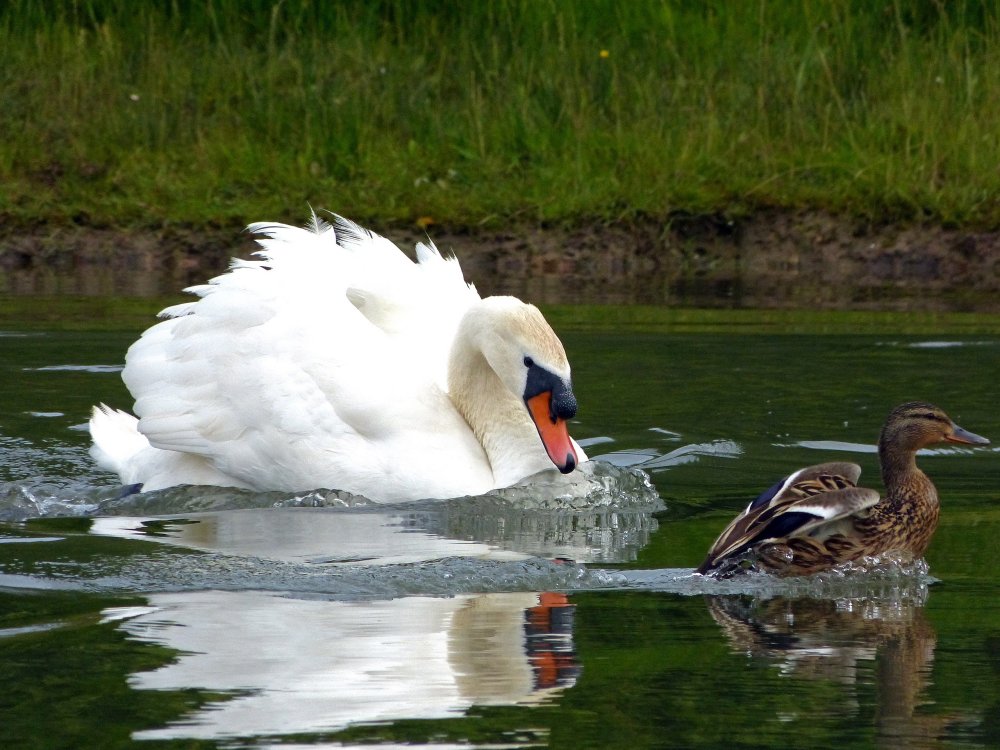
These are some birds you are likely to see around the water.
These are all long-legged, long-necked wading birds typically seen near the water's edge. They will tolerate your approach to a point, and then fly away - one of the advantages of being a bird.
Snowy Egret
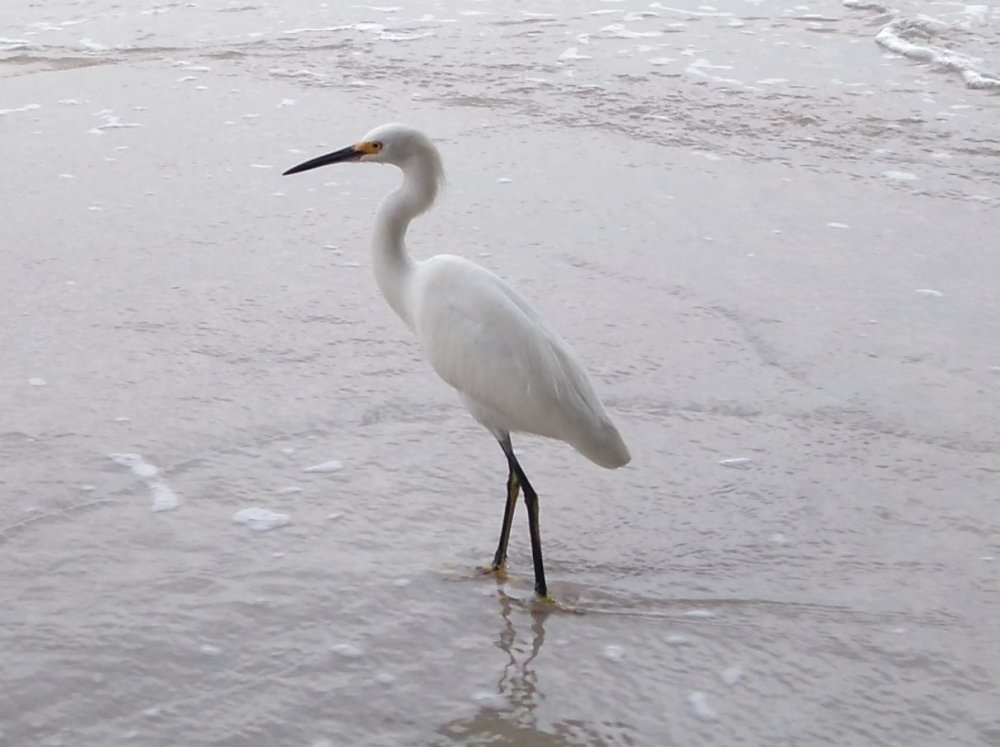
The Snowy Egret is very easy to spot, because it makes no attempt at camouflage, and stands out in any environment. They make up for this by being rather wary, although I have seen individuals beg for food from fishermen, a learned behavior that is not common. The Snowy Egret is very common; it would be difficult to go out kayaking and not spot at least one.
More: Egrets & Herons ...
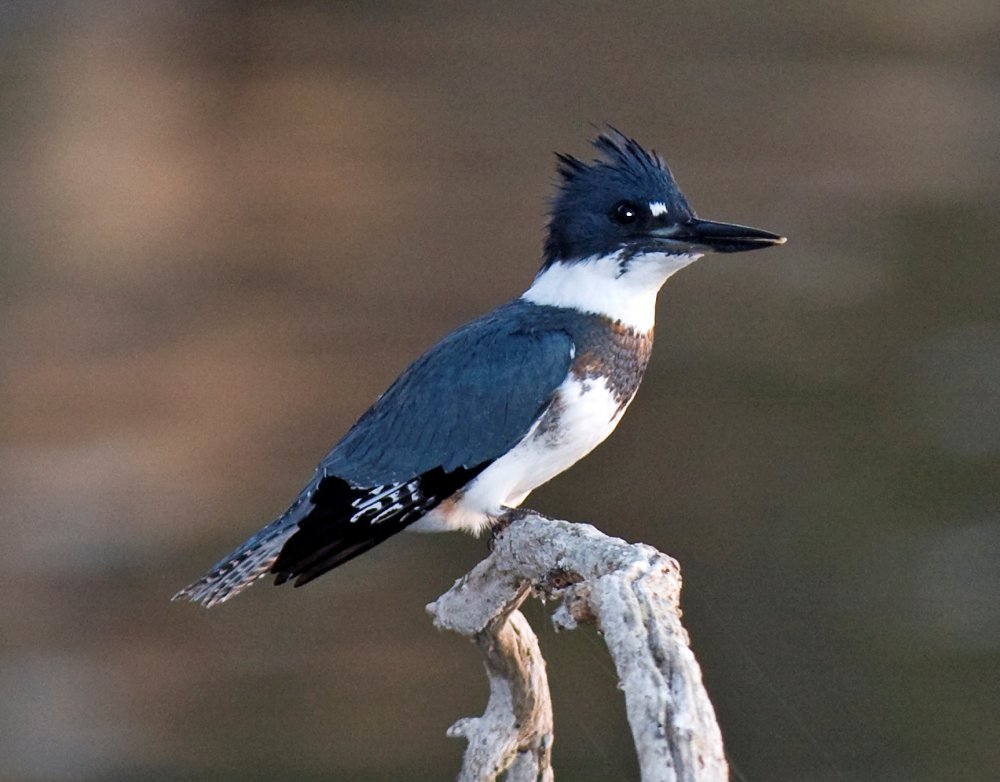
This is one of my favorite birds to see when I am out paddling. You're not going to get very close though, a good reason to bring along the binoculars. The Kingfisher is a songbird that thinks it's a hawk. They are actually related to Hummingbirds. You might think that makes them not very aquatic, but I have seen them dive into the water, surface, and take off again, so I guess they put some effort into evolving. ( The Cormorant might want to take notes. ) Kingfishers usually sit in branches near the shoreline, and fly very low and fast over the water.
More: Belted Kingfisher ...
Osprey
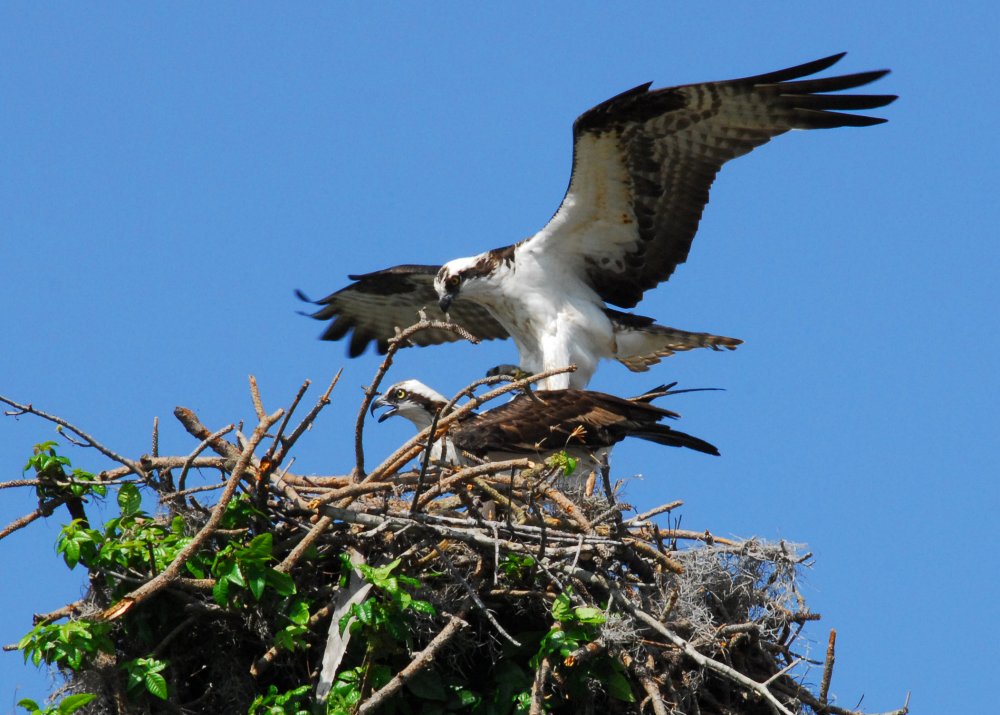
Ospreys, or "Fish Hawks", are surprisingly common, and can be found just about anywhere. You'll typically see them flying high over the water from a tree on one side to a tree on the other, occasionally diving down on some unlucky fish. Ospreys are usually seen alone, but mating pairs stay together, and I think young siblings stay together for a while as well. Ospreys are one of the biggest birds that you are likely to see. A single species has an almost worldwide distribution - pretty much everywhere except Australia.
More: Ospreys & Eagles ...
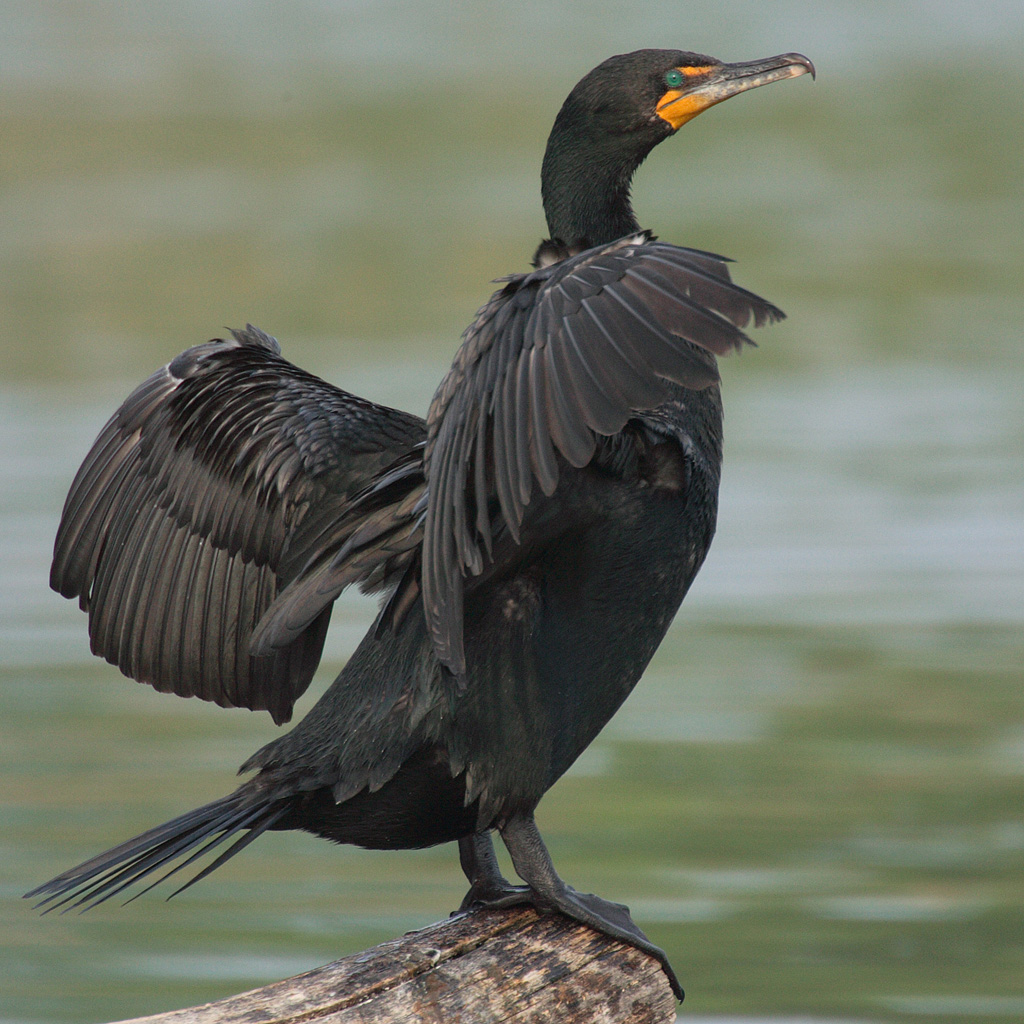
This is a bird that you are almost guaranteed to see on any kayaking excursion. This is because they are very common, and not very waterproof. After diving underwater, they need to dry their sodden feathers in the sun, as the one above is doing. You can often get pretty close to them at these times.
More: Double-Crested Cormorant ...
Kayaking is an outdoor activity. Yes, kids, you'll have to put down your game controllers and go outside. Out there is what us older folks call nature. Nature can actually be quite beautiful and interesting, and you don't have to worry about your screen resolution and refresh rate - both are infinity. So here is a short list of flora and fauna ( plants and animals ) that you might see in freshwater environments:
More: Wildlife ...