Cable Lock
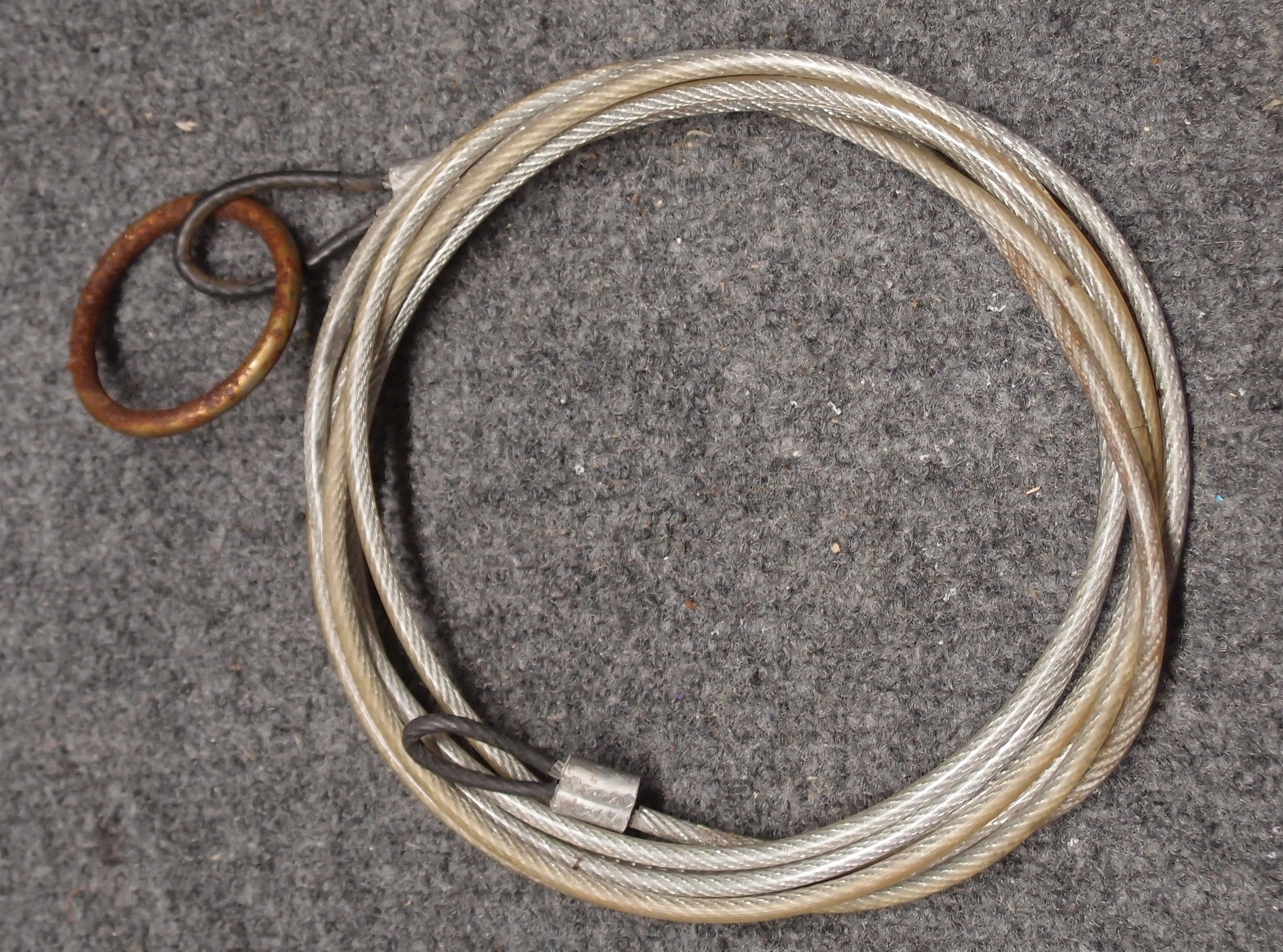
This is a cable-lock I made, about 12 feet long. It is just 3/16" coated steel cable from the hardware store, with crimp ferrules, and a big steel ring in one end. The ferrules fit through the scupper holes on the boat, but the steel ring does not. Together with any padlock, this will secure the boat (or several) to your truck, roof rack, a tree, or anything else that is handy. You can take this cable with you, it will give you peace of mind if you leave the boat unattended to go exploring on land.
The object is not to stop a determined thief - you can't do that. It is to stop someone from casually taking your boat with their bare hands. Don't lock the boat by the handles - they are easily cut with a pocket knife and cheap to replace. Run the cable through a scupper hole, and a thief would have to destroy the boat to steal it. If your boat doesn't have scupper holes, you can probably find someplace to thread the cable though, or make a suitable hole in the seat.
You can find a cable like this all set to go on Amazon for under 20 bucks. Where I used a steel ring, you could use a second padlock.
