Poison Ivy
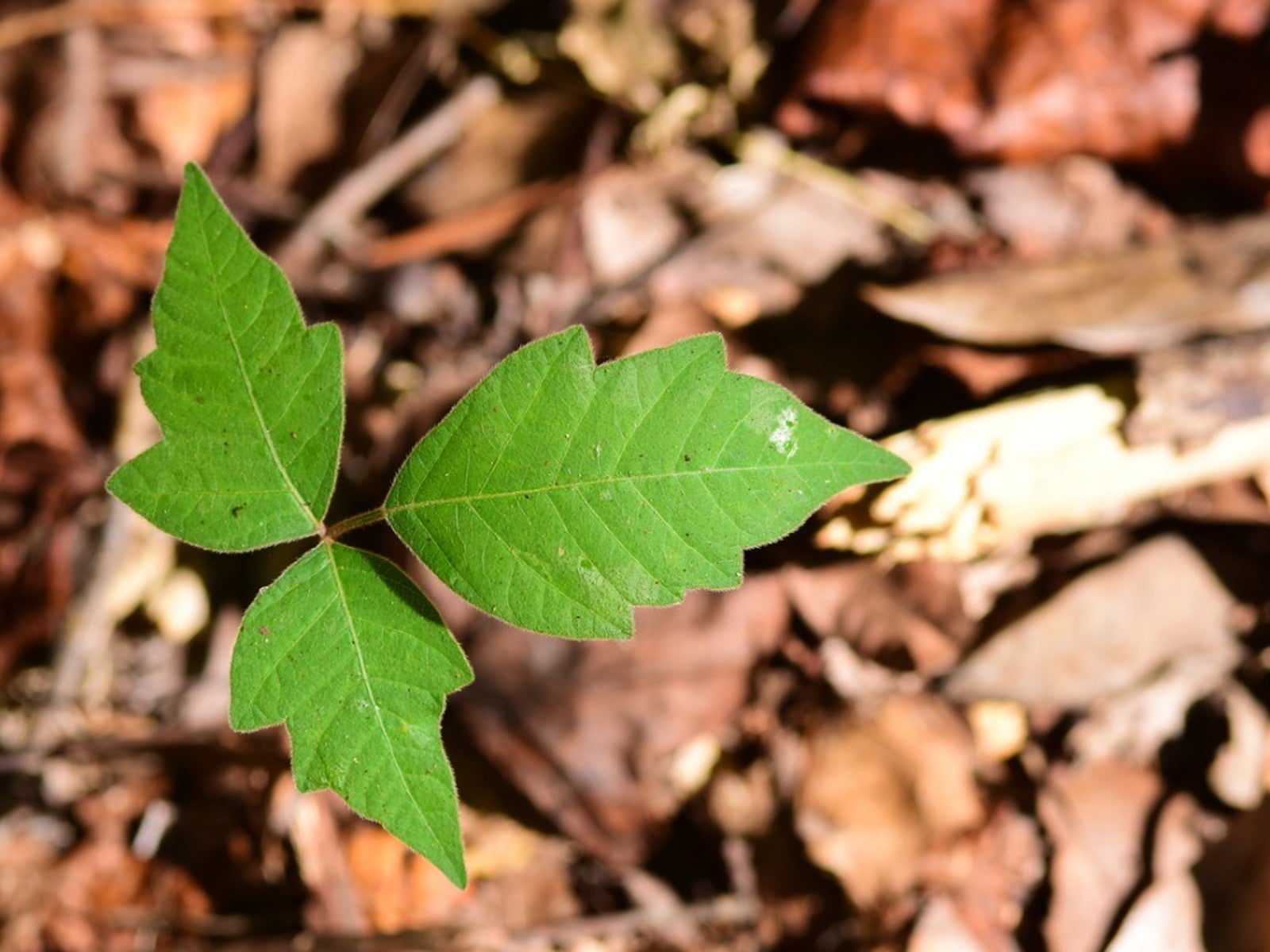
Pictured above is a classic example of poison ivy. Note how three leaves grow in a cluster from a single node, with no leaves further down the stem. The side leaves have no stalks, while the center leaf has a short stalk. This pattern is universal - if you see it, stay away.
The actual leaf shape is highly variable, even on the same plant, but there are a few common features: The side leaves may have one or more 'thumbs' on the outside edge, while the center leaf may have thumbs on both edges. Or there may be no thumbs at all. The leaf edges may be toothed as shown, or entirely smooth. Fall colors are anything from yellow to red.
Likewise, the overall growth habit is highly variable. It may be a low-growing ground vine, a climbing vine, a free-standing bush, or even a small tree. The vine habit is by far the most common. The entire plant is 'poison', not just the leaves. Poison ivy likes partly-sunny places like forest edges, walls, buildings, and of course, waterways.

Many other plants have this three-leaf pattern at the tip of the branch, but with side leaves along the stalk below. These are not poison ivy. Virginia Creeper is often confused with poison ivy, but it has five leaves in a whorl, and is harmless. Regular 'English' ivy has single leaves.
Poison ivy gets you with an oil called urushiol, and it does not have to be alive to do it. People's reaction varies with the individual, I was never bothered by it as a child, but now have to keep a keen lookout. If you get it on you, you have some time to scrub it off with dish soap and a rag. I like orange degreaser - a bit hard on your skin, but gets the job done. Kayakers can keep a small bottle of dish soap and a rag in the boat, just in case. If you think you got the oil on your clothes, wash them right away with hot water and detergent, that will get rid of it.
Poison ivy is only a problem for humans, animals have no allergic reaction. Goats and deer eat the foliage, and birds eat the seeds, which spreads the plant all over. Thanks to this, vigilance is the only way to keep the weed at bay. The best way to get rid of poison ivy is to put on gloves - leather is best - and carefully pluck the plant out by the roots while it is still small. Put it in a plastic bag and throw it away. Never attack poison ivy with a weed-whacker, and never burn poison ivy - inhaling the smoke can send you to the hospital!
Once the oil soaks into your skin, there is not a lot you can do but tough it out. Scratching does not spread it, that is an old wive's tale. I have found that a day at the beach with sun and salt water can help. Maybe the UV breaks down the oil.