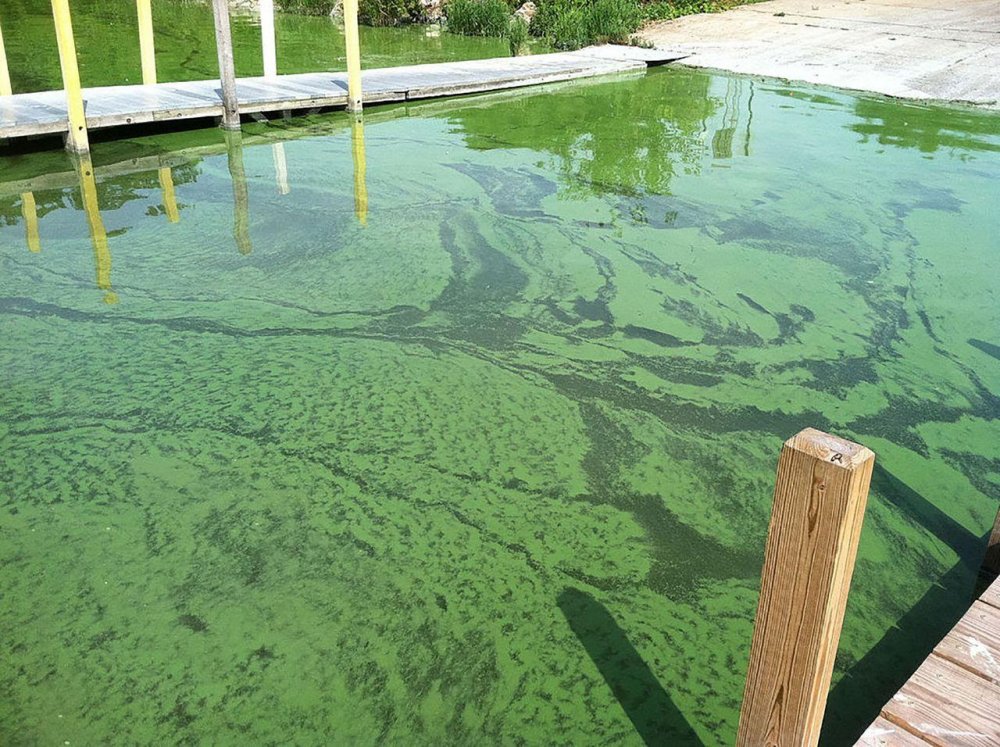
Unlike marine algae, freshwater algae is usually little more than green slime. Much of it is actually microscopic single-celled organisms that form the base of the food chain. That is why the water is green ( when it is green. ) *
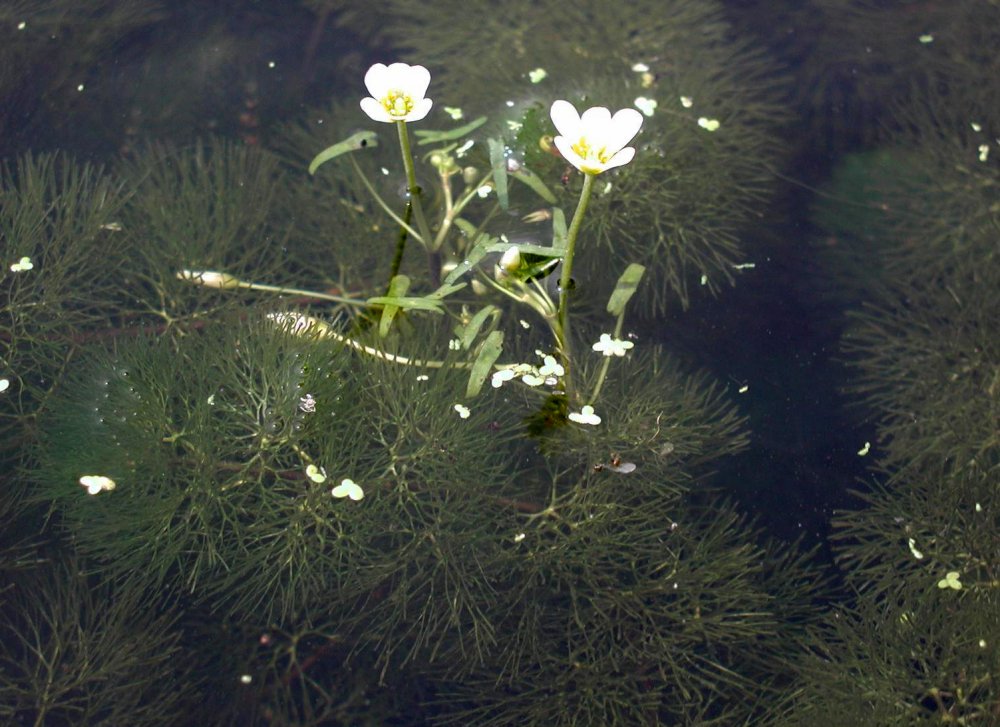
Fanwort is a fully aquatic true plant. It grows steadily through the warm months, and can choke-out large areas, then dies back in the winter. Fanwort produces tiny flowers above the surface.
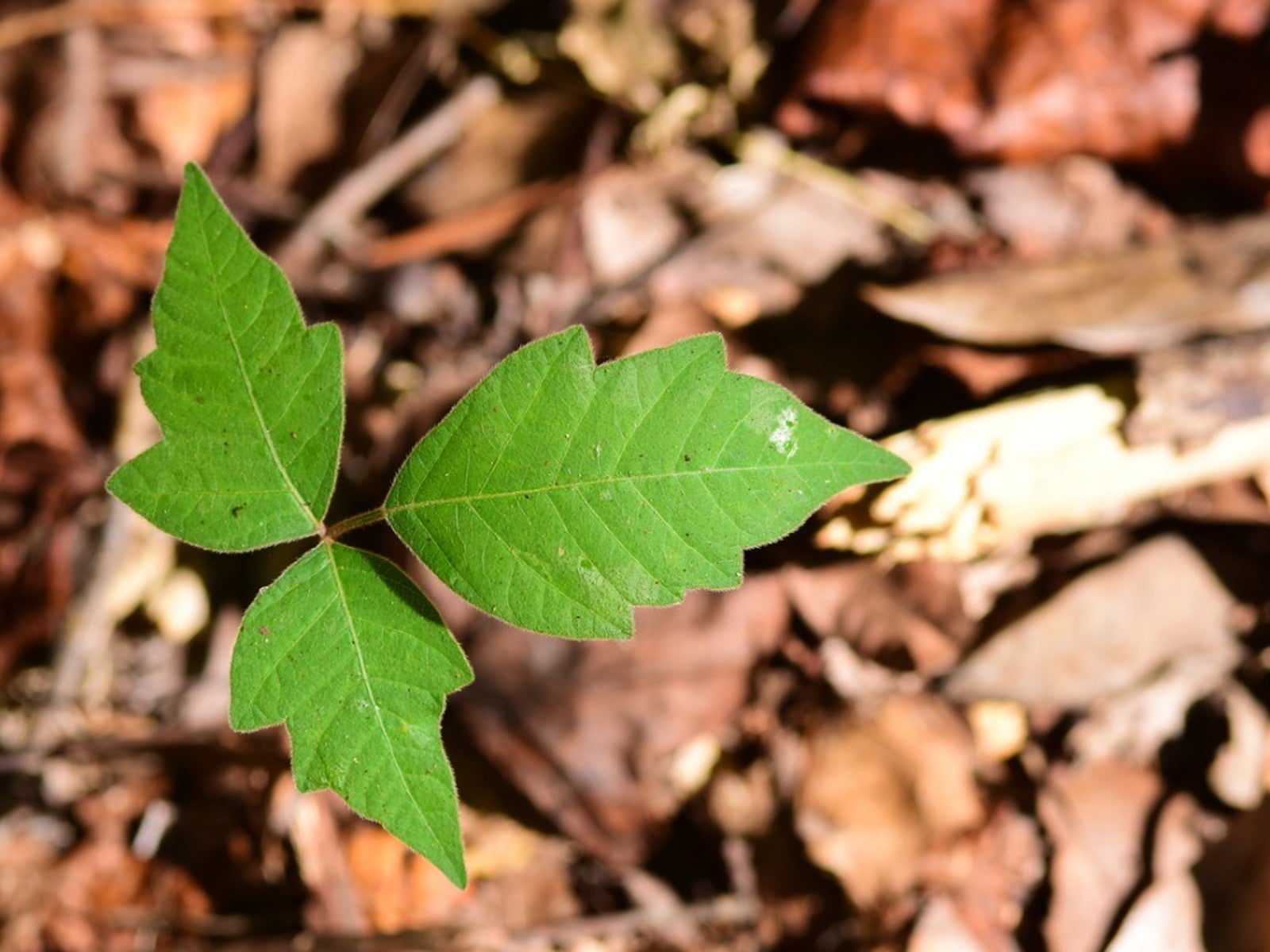
Pictured above is a classic example of poison ivy. Note how three leaves grow in a cluster from a single node, with no leaves further down the stem. The side leaves have no stalks, while the center leaf has a short stalk. This pattern is universal - if you see it, stay away.
Sedges and Reeds are superficially similar, but actually quite different. But unless you are a biologist - who cares? ( Reeds are grasses, sedges are sedges. )
Sedges
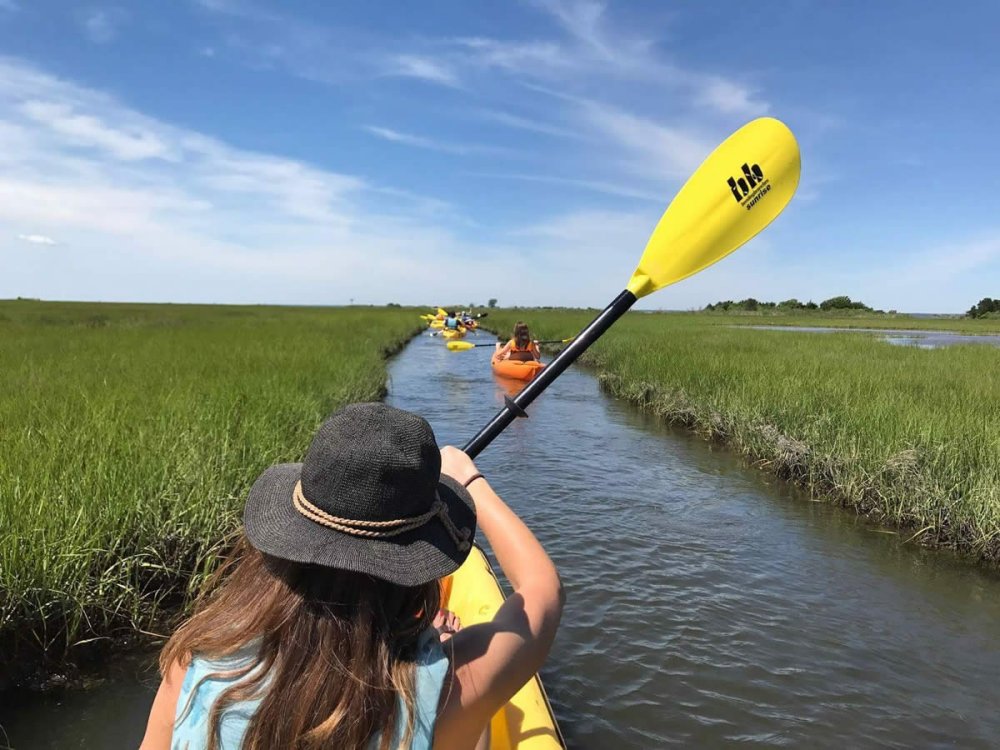
Sedges tolerate a wide range of salinity, from freshwater to seawater, although they seem to grow best in brackish water. So, like above, if you are exploring a bay or inlet, that stuff all around you is most likely sedge.
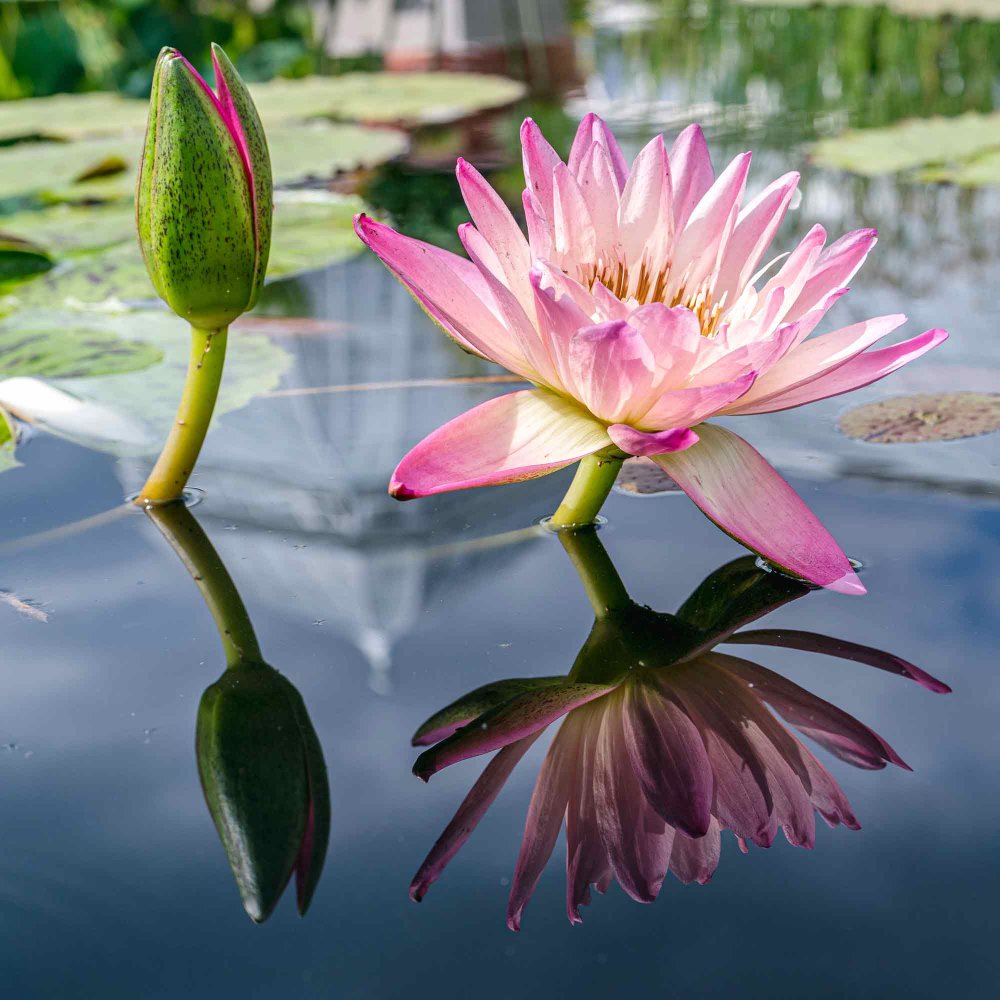
Water Lilies are found in all still and slow-flowing freshwaters. One thing that I have noticed about them is that on any lake or pond, you will always find white ones, and usually also pink or yellow ones, but never both. The flowers begin in summer and last well into fall.
The Swimming River is an extension of the Navesink. On the map above, you can see the main put-in is at the upper-right in the new (2015) county park. You need to check in at the ranger's hut; there is a ramp fee of $7 per vessel, including kayaks and canoes. The park also has a strict closing time, at which the gates are locked. For details, see the county's page here: