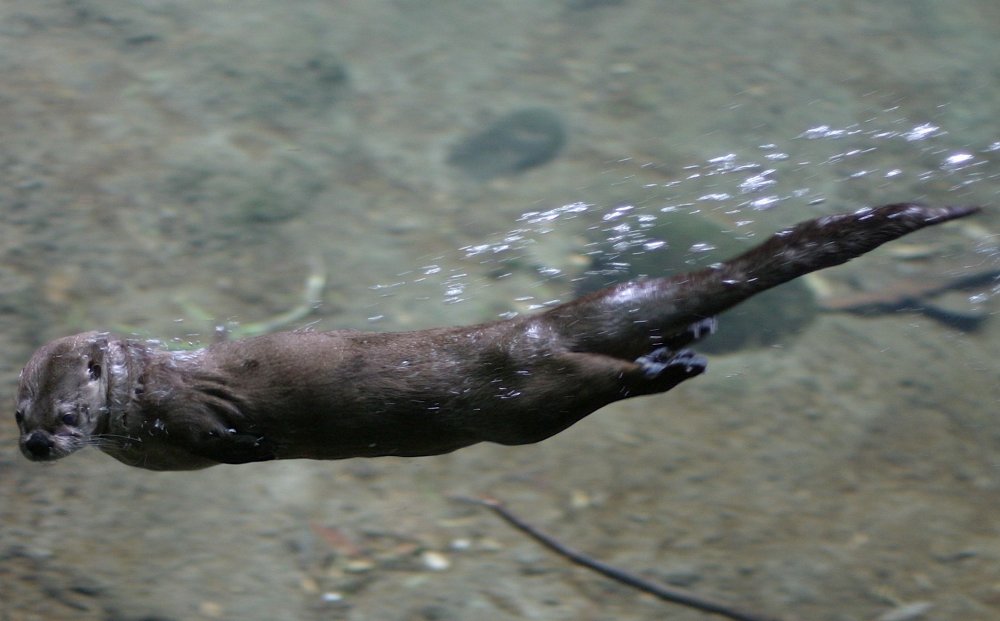
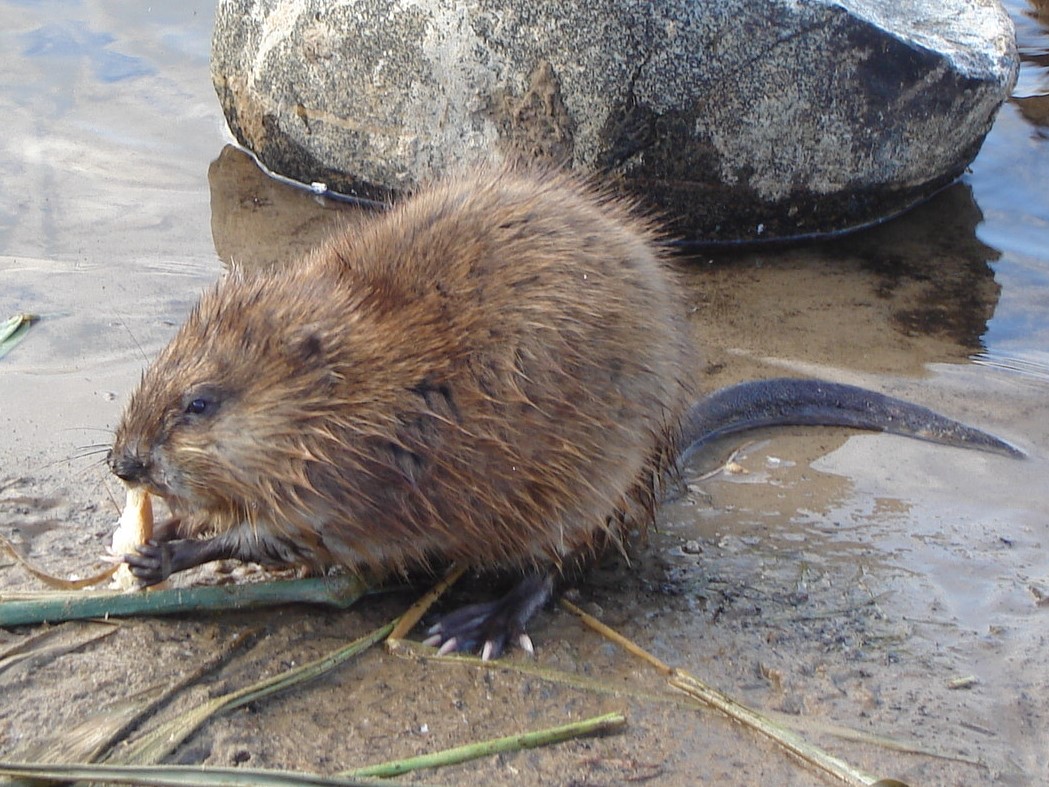
Muskrats are common across the state. While considerably bigger than plain old rats, they are nowhere near the size of beavers, which can get to 50 pounds. Muskrats have tails that are slightly flattened from side to side, unlike beavers which have broad flat tails. Both animals build conical houses in the water, but only beavers build dams.
A weir or low-head dam is a barrier across the width of a river that alters the flow characteristics of water and usually results in a change in the height of the river level. Weirs are also used to control the flow of water for outlets of lakes, ponds, and reservoirs. There are many weir designs, but commonly water flows freely over the top of the weir crest before cascading down to a lower level.
Even though the water around weirs can often appear relatively calm, they can be extremely dangerous places to boat, swim, or wade, as the circulation patterns on the downstream side - typically called a hydraulic jump - can submerge a person indefinitely. This phenomenon is so well known to canoeists, kayakers, and others who spend time on rivers that they even have a rueful name for weirs: "drowning machines".